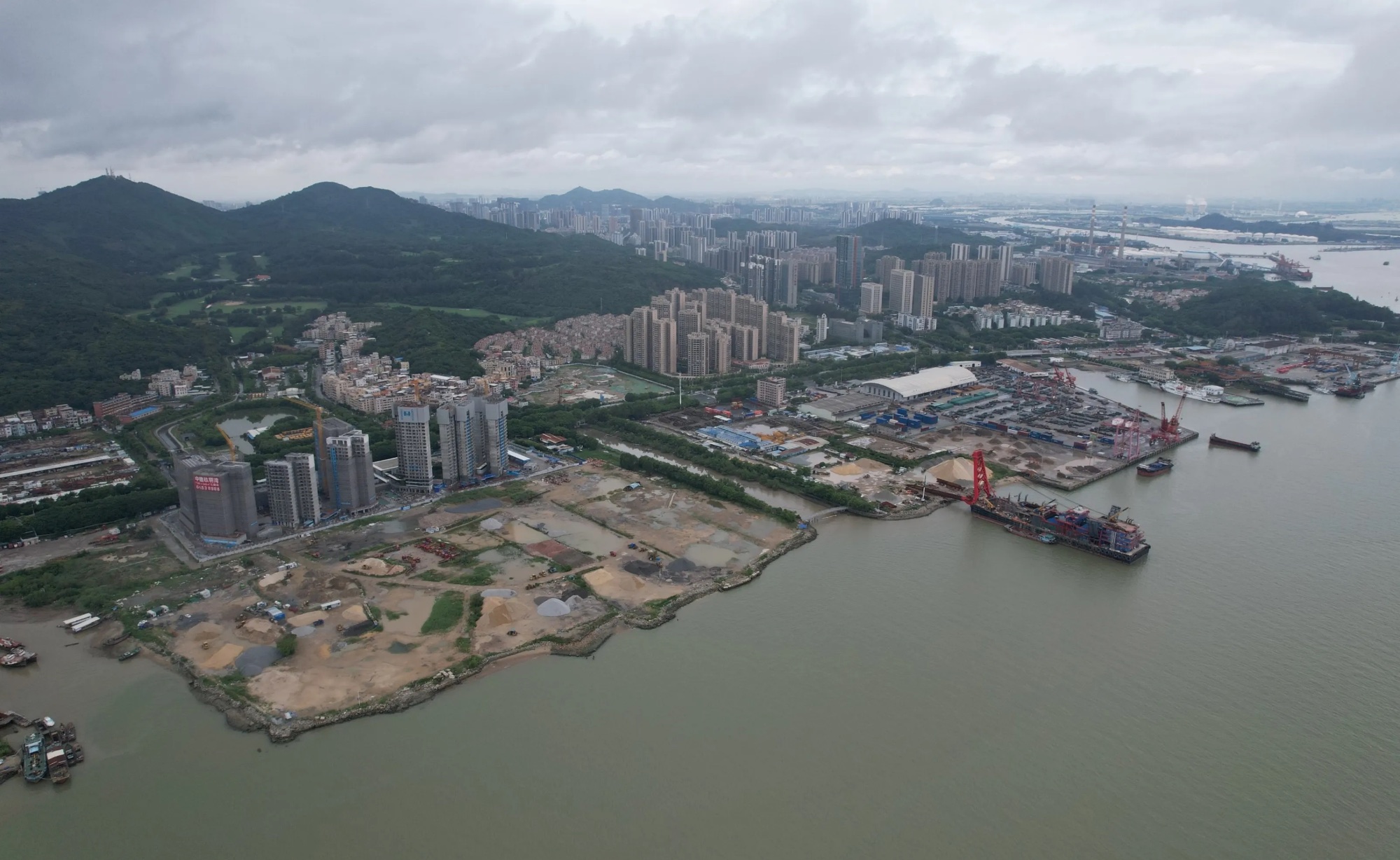
Context
Nansha contains the majority of Guangzhou’s coastal and marine resources and plays a strategic role in the Guangdong–Hong Kong–Macao Greater Bay Area. Despite its extensive waterfront, islands, and maritime infrastructure, urban development and public life have remained predominantly land-oriented, with limited integration between the city and the sea.
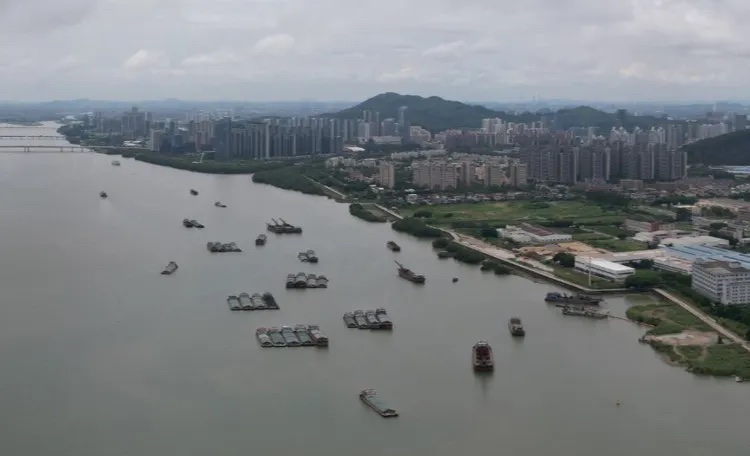
Working waterfronts, residential districts, and marine activities meet along Nansha’s shoreline.
The planning problem
Existing marine spaces were largely dominated by port, industrial, and logistical uses, resulting in fragmented coastlines, weak land–sea interaction, and underused public waterfronts. The challenge was not a lack of marine resources, but the absence of a spatial framework capable of translating maritime assets into cultural, social, and urban value at multiple scales.
Marine-oriented framework
The “Maritime Nansha” thematic study reframed the sea not only as infrastructure or territory, but as an urban place. Drawing on maritime spatial planning and international waterfront precedents, the work proposed a typological system of blue spaces and a multi-scale strategy to reorganize coastal functions, improve public access, and strengthen land–sea interaction across the district.
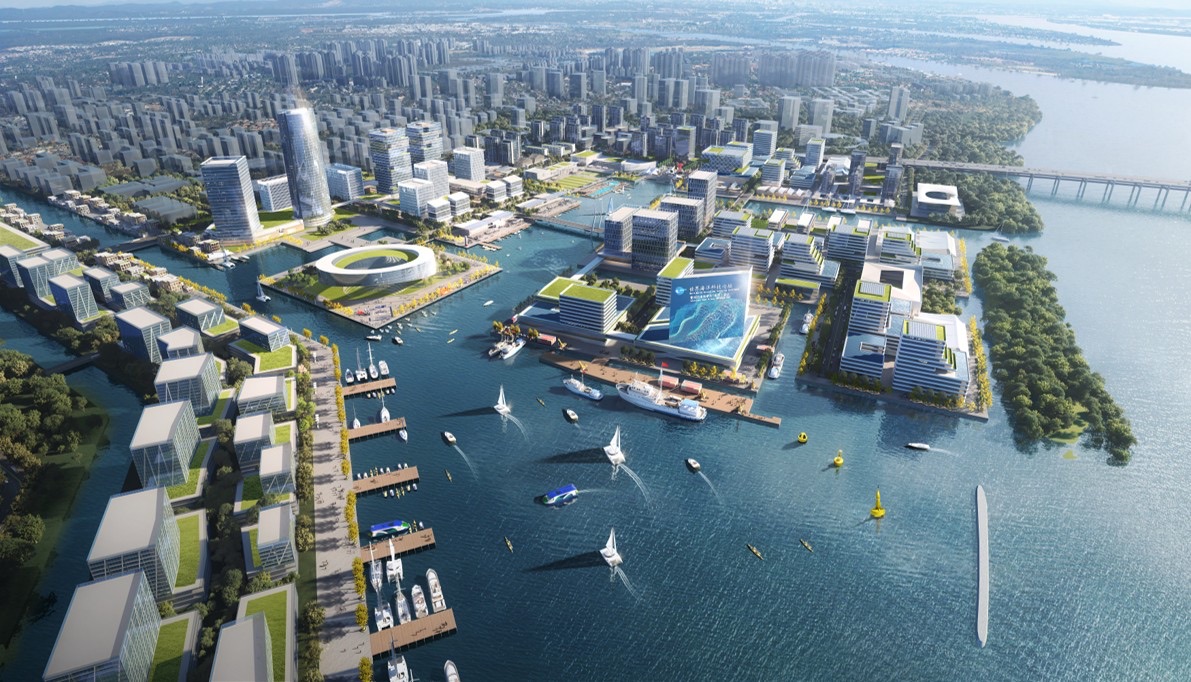
A feature-area vision in which public life, employment, cultural uses, and water-based activity are organized around a connected blue-space system.
Feature-area urban design
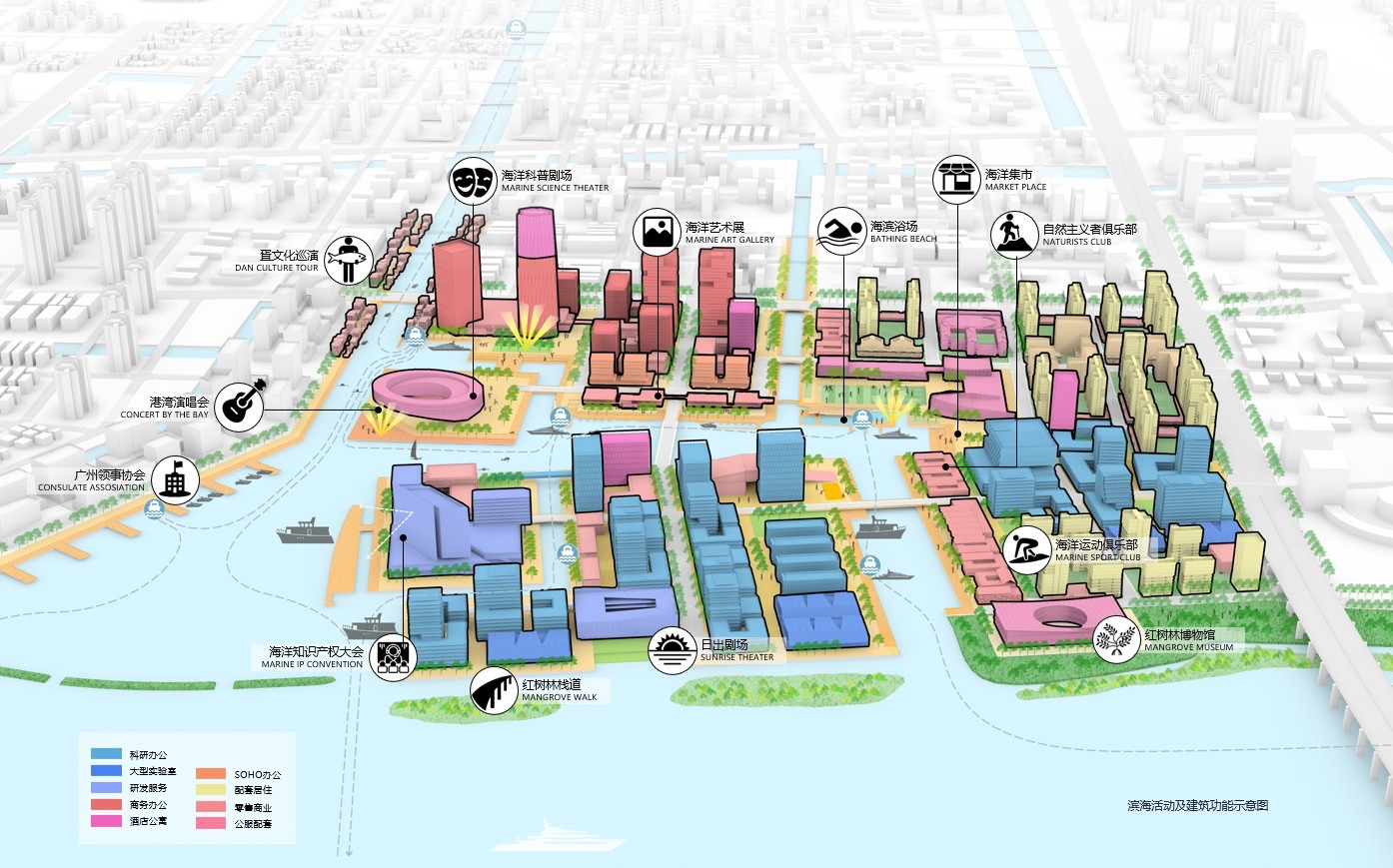
The urban design translates the district-scale framework into a network of waterfront cultural, recreational, commercial, and research programs.
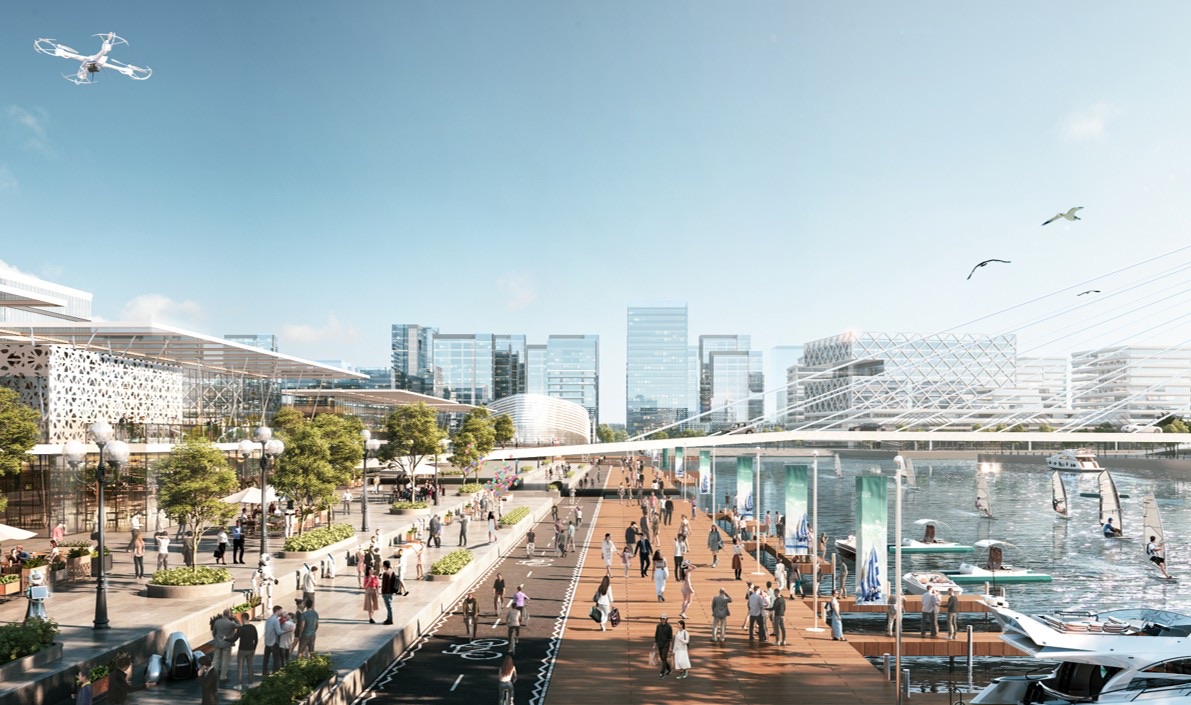
Public promenades and marine activity spaces bring everyday urban life to the water’s edge.
Outcome
The study provided a conceptual and spatial foundation for integrating marine space into Nansha’s urban structure, supporting its transition toward a marine-oriented city within the Greater Bay Area. It demonstrates how planning can work across land and sea to address institutional, spatial, and cultural fragmentation under complex governance and development conditions.
The project later informed the essay Spatial Characteristics of Central Activity Zones in Maritime Cities: Research and Design Practice.