Research question
Yizheng sits next to Yangzhou, one of China’s best-known tourism destinations, but receives only a small share of its visitor flows. The study investigated why geographic proximity had failed to generate sustained tourism spillover, using Yizheng as a case of the “proximity trap” experienced by destinations in the shadow of major tourism cities.
Research design
The research combined Baidu mobility heatmaps, visitor-origin and OD data, municipal tourism statistics, social media analytics and more than 20 intercept interviews. Triangulating these sources made it possible to compare regional visitor patterns with destination awareness and identify where tourism flows were lost.
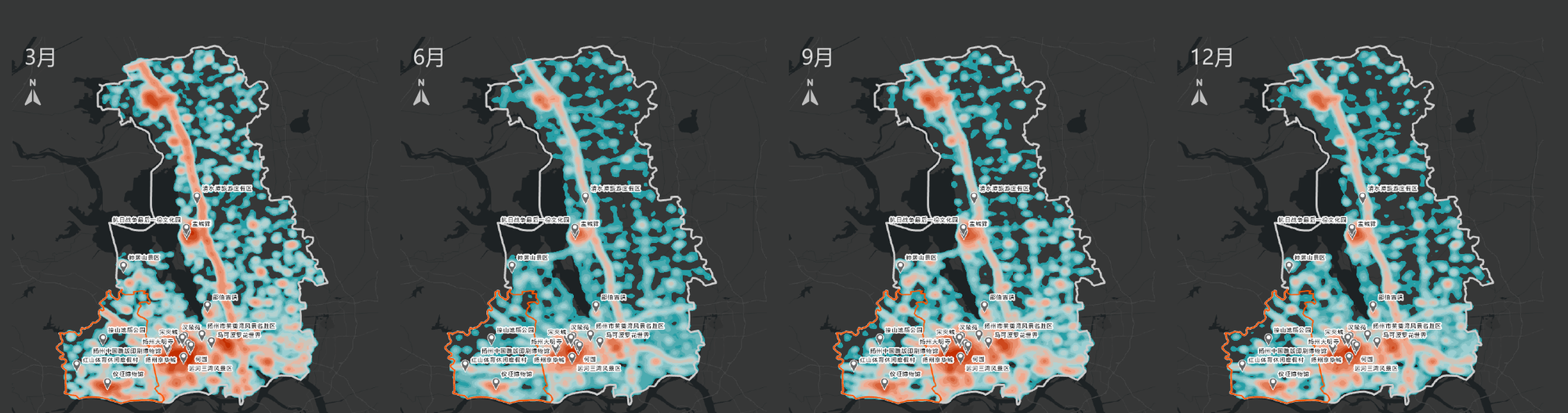
Multi-period heatmaps show the concentration of tourism activity in Yangzhou and the limited conversion of those flows into visits to neighboring Yizheng.
Evidence of spillover failure
Visitor numbers in Yizheng rose sharply during major events, but declined after the events ended. The pattern indicated that temporary attention had not developed into stable visitor demand.
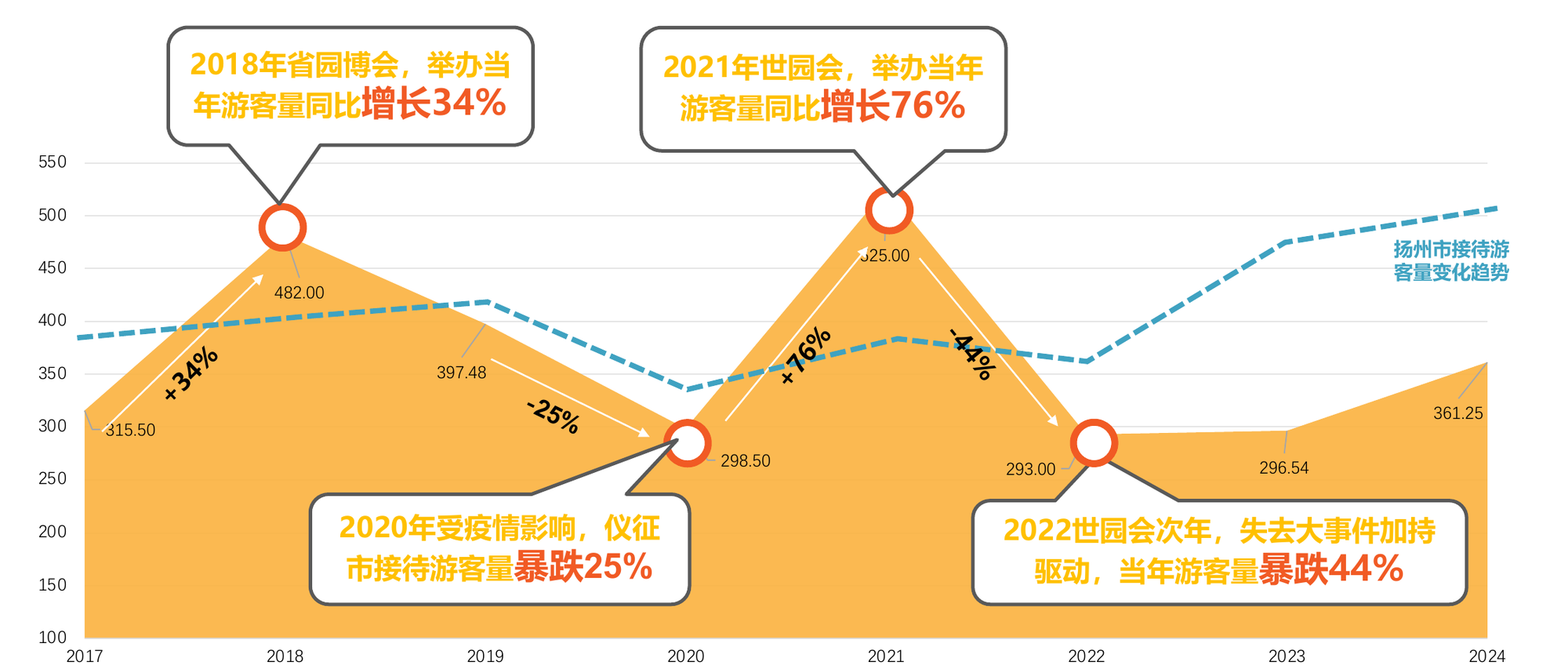
Visitor numbers increased during the 2018 and 2021 horticultural expos, then declined when the event effect weakened.
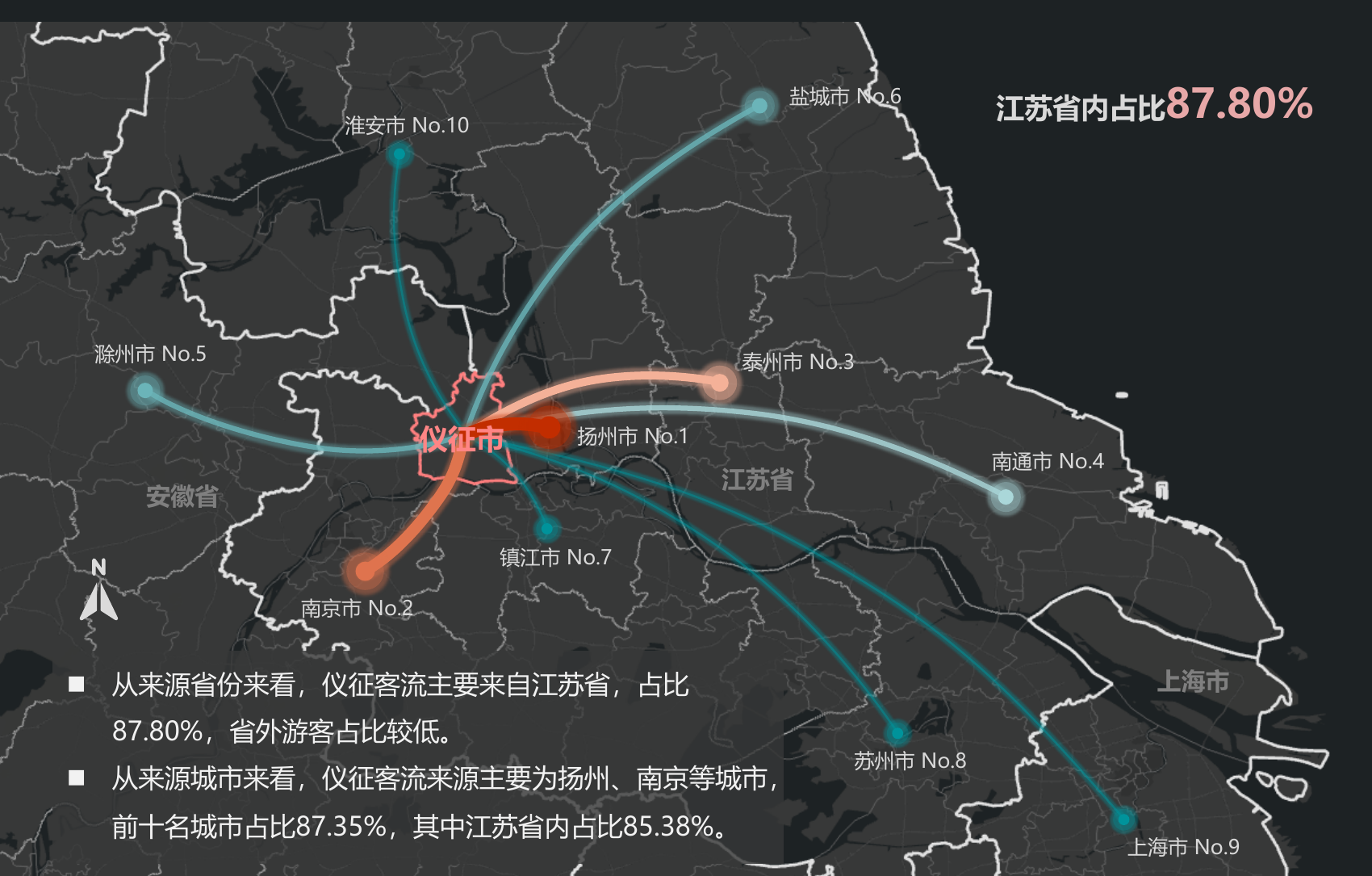
Visitor-origin data show that Yizheng remained dependent on a narrow regional market.
Some 87.8% of visitors came from within Jiangsu Province, with Yangzhou alone accounting for 69.6%. Yizheng therefore attracted nearby visitors without extending its reach into Yangzhou’s broader tourism market.
Social media analysis revealed a parallel recognition gap. Tourism-related topics represented less than 25% of the analyzed Douyin content and less than 20% of the Xiaohongshu content associated with Yizheng.
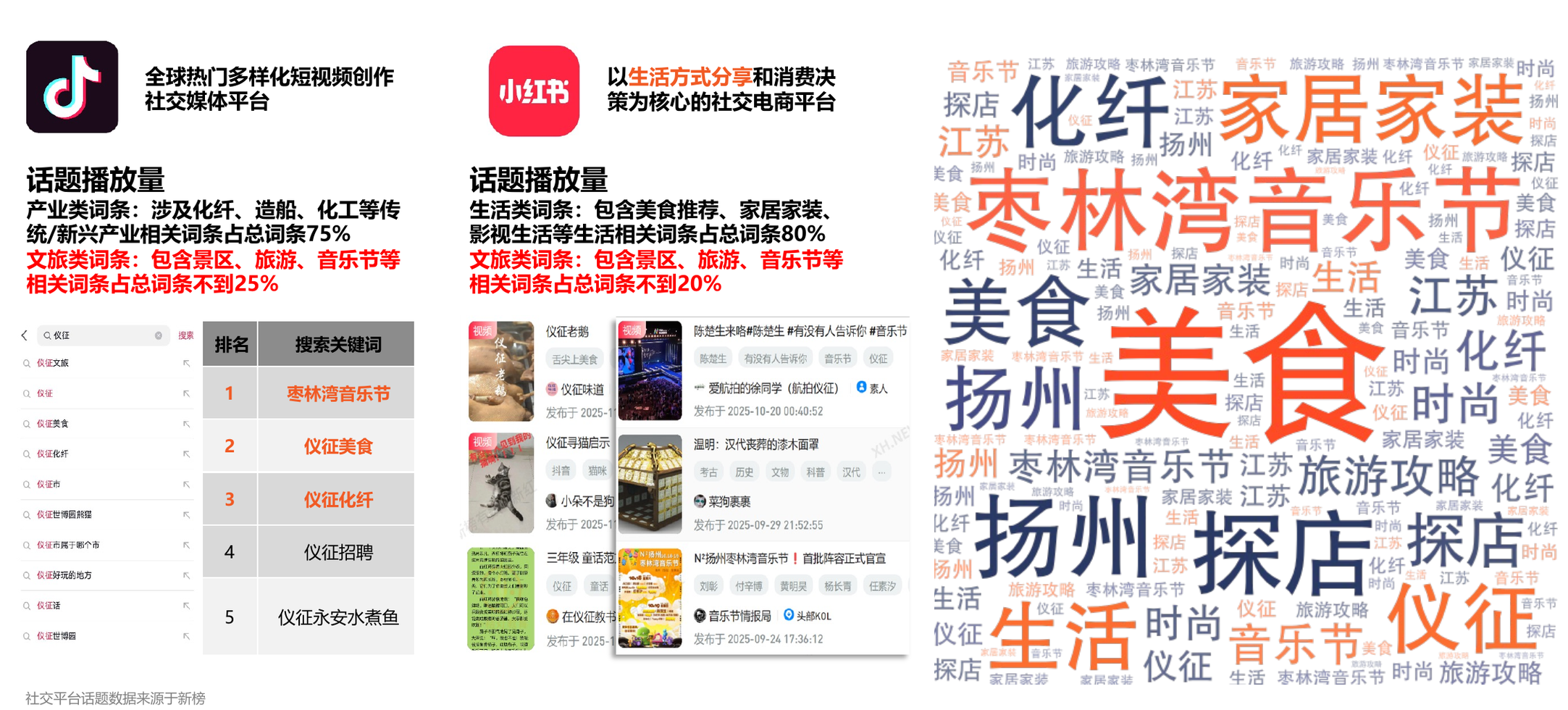
Platform data and the accompanying word cloud show that online associations with Yizheng remained dominated by industry, food and everyday life rather than tourism.
Findings
The study identified seven mechanisms through which potential visitor flows leaked away, including fragmented transport connections, discontinuous visitor experiences and weak destination recognition. It translated the diagnosis into 29 spatially targeted interventions for Yizheng’s 2026–2028 investment plan.
The findings show that proximity alone does not guarantee tourism spillover. Conversion depends on whether visitors can recognize the neighboring destination, connect it to a distinct experience and incorporate it into their journey.